Spin Up x GAINS: Introducing the AI Youth Action Programme
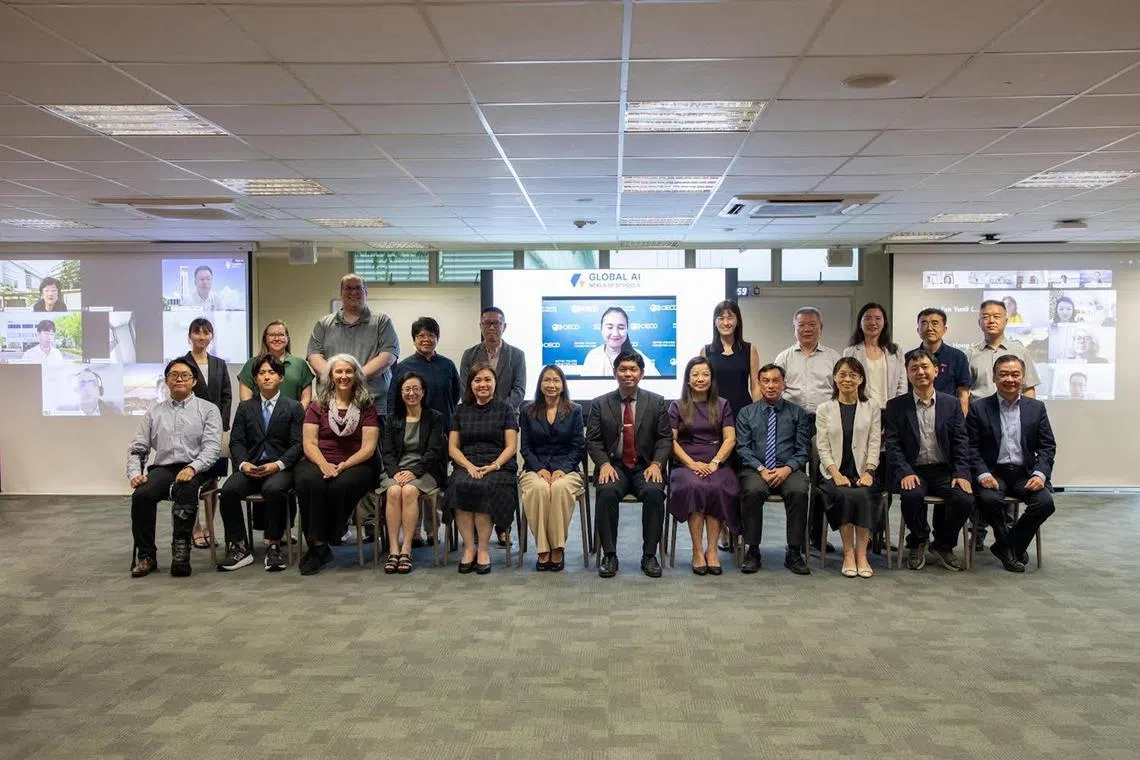
We are excited to announce that Spin Up will be collaborating with the Global AI Nexus of Schools (GAINS) for our 2026–2027 iteration. Together, we are launching the Spin Up x GAINS AI Youth Action Programme, bringing our youth-led mentorship model to schools across the GAINS network.
About GAINS
GAINS is a global network of schools, institutes of higher learning and industry partners working together to champion responsible, human-centred and values-driven AI in education. Founded in Singapore with Hwa Chong Institution as its founding school, GAINS was officially launched on 4 August 2025 with support from the OECD, starting with 23 schools from seven countries, including China, Japan and Estonia. One of its core pillars is student-led impact: giving learners the chance to collaborate across borders and tackle real problems with AI.
Same Framework, New Focus
Spin Up’s 8-month programme has always guided young changemakers from idea to impact: ideating through design thinking and project management workshops, executing with 1-to-1 student mentorship, and sustaining projects through an annual handover. This year, we are applying that same framework to AI, in line with the OECD AI Literacy Framework (2025), which describes four ways young people interact with AI: engaging with AI, managing AI, creating with AI, and designing AI.
Teams can choose between two tracks, so every student can take part at a level they are comfortable with.
Track 1: Ideation & Research
Centred on awareness and advocacy, this track is open to teams of any technical background. Teams will carry out literature reviews to identify real-world pain points that AI could help solve, and share their findings with educators for further development. They can also run advocacy campaigns, seminars or podcasts to raise AI literacy among their peers. This work matters: research cited in the OECD AI Literacy Framework found that 49% of youth struggle to critically evaluate AI, including telling when it makes up facts.
Track 2: Application & Building
Centred on action, this track gives technically stronger teams the chance to build real solutions to community issues. Teams can harness existing AI tools for social good, such as using AI website builders to create an app for students, or take on end-to-end AI project development, such as using AI to monitor traffic congestion in school. Scaffolded project frameworks and suggested problem statements will help teams get started.
Two Mentors for Every Team
Every team will be supported by a Youth Action Mentor, a student with a track record of at least one successful community project, who advises on problem scoping and execution. Teams will also be paired with an AI Mentor, a student with a strong background in programming or AI research, who guides them on technical feasibility and direction. Together, they help teams grow as active global citizens while building the skills they need for an AI-driven world.
Programme Timeline
November 2026 (Project Start): Youth Action Mentor matching, plus Futures Literacy and CDEFG Literacy ideation
December 2026 – January 2027 (Proposals): Preliminary project proposals and AI Mentor matching
January – July 2027 (Execution): Project execution with consistent support from both mentors
August 2027 (Closing): Project showcases and mutual learning


